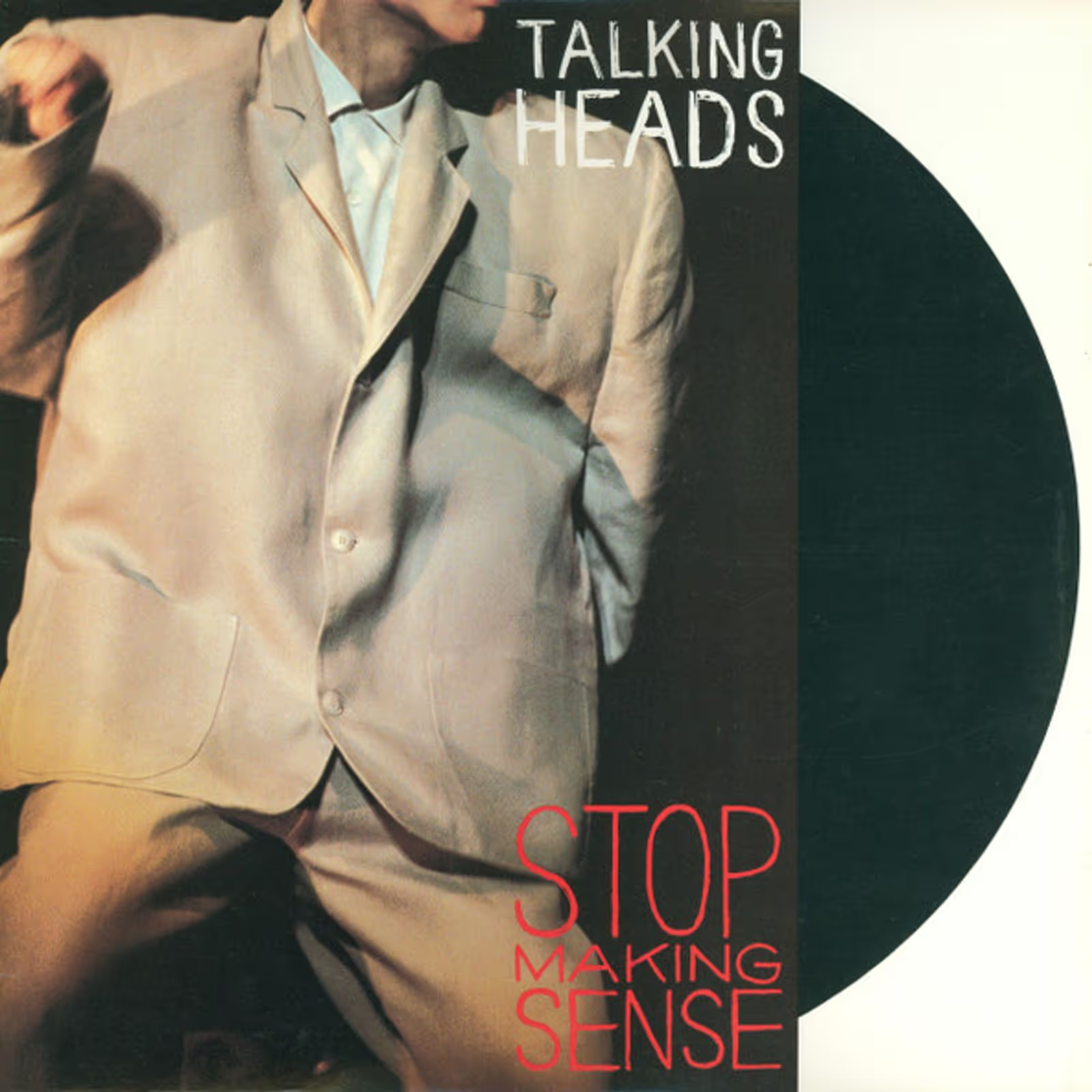
Talking Heads
Talking Heads emerged from New York's CBGB scene in 1975, transforming art school anxieties into a new kind of American music. David Byrne, Tina Weymouth, Chris Frantz, and Jerry Harrison fused punk's nervous energy with funk rhythms, African polyrhythms, and an almost clinical detachment that made paranoia sound danceable. Their 1978 collaboration with Brian Eno, More Songs About Buildings and Food, signalled their ambitions beyond three-chord minimalism, whilst Remain in Light (1980) became a landmark of post-punk experimentation, its dense grooves and disorienting production anticipating decades of electronic hybridity.
Byrne's twitchy stage presence and oblique lyrics captured the disorientation of late-century life, suburbia as psychological battleground. Stop Making Sense (1984) remains among cinema's finest concert films, all oversized suits and compulsive motion. The band dissolved in 1991 after internal tensions, but their influence permeates art rock, post-punk revival, and any music that treats unease as something to move to. They made intellectualism funky and funk cerebral, occupying territory nobody knew existed.