The Cure
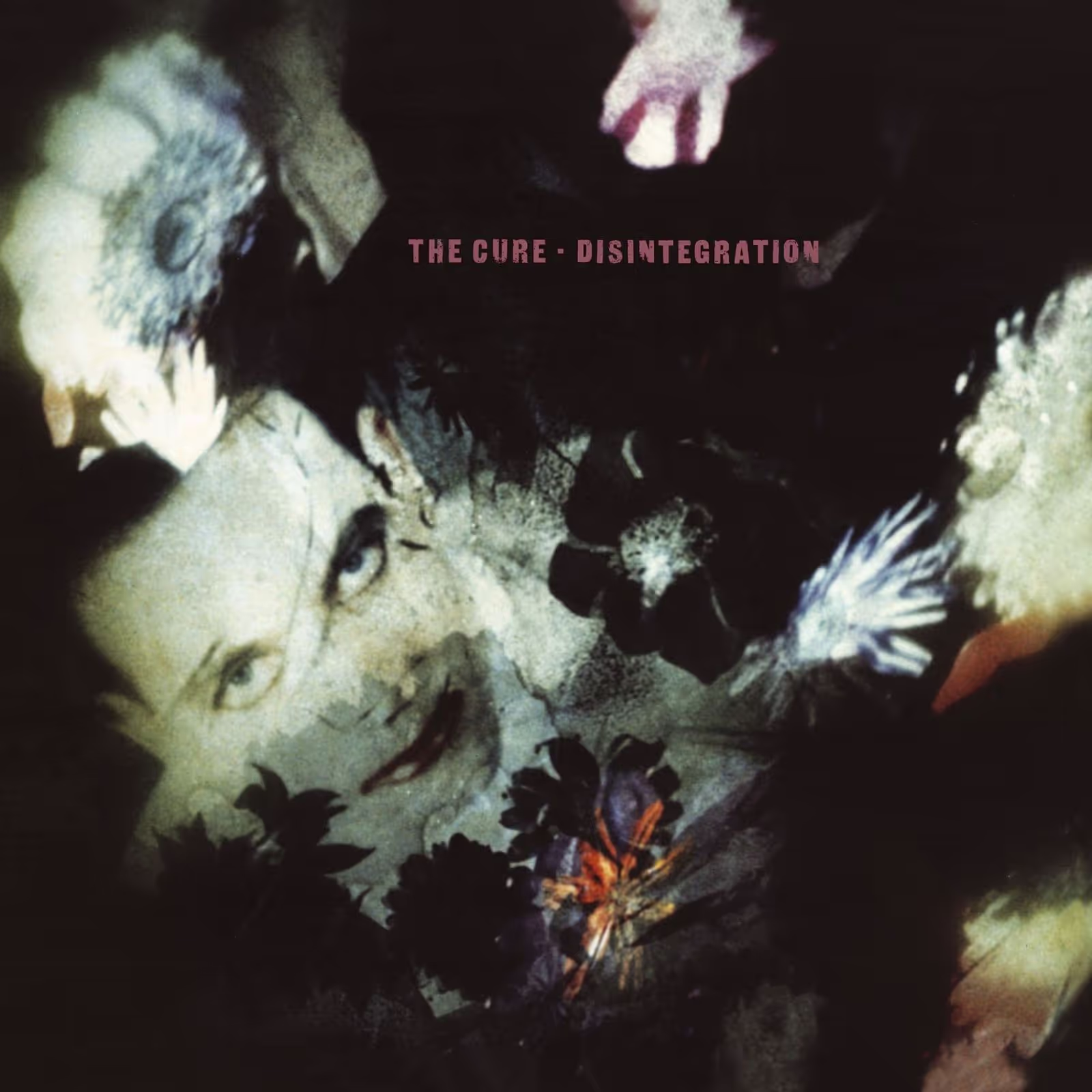
The Cure emerged from Crawley, England in 1976, initially as a post-punk outfit before architect Robert Smith steered them through gothic rock, new wave, and atmospheric pop across five decades. Their sound oscillates between airy major-key shimmer and oppressive minor-key dread, built on Smith's distinctive guitar textures, from the chiming arpeggios of Disintegration (1989) to the stripped anxiety of Pornography (1982). Albums like Kiss Me, Kiss Me, Kiss Me (1987) showcased their range, whilst early work influenced the nascent goth movement despite Smith's ambivalence toward the label.
Commercial peaks arrived with "Lovesong" and "Friday I'm in Love," yet their catalogue rewards sustained attention: Disintegration remains a masterclass in melancholic grandeur, its production balancing crystalline guitars with cavernous reverb. Smith's smudged lipstick and teased hair became iconography for outsider identity, his lyrics probing romantic obsession and existential unease without descent into melodrama. The band's longevity, sustained by Smith's creative control, positions them as bridge between punk's raw immediacy and alternative rock's emotional sprawl, their influence audible in generations of introspective guitar music.