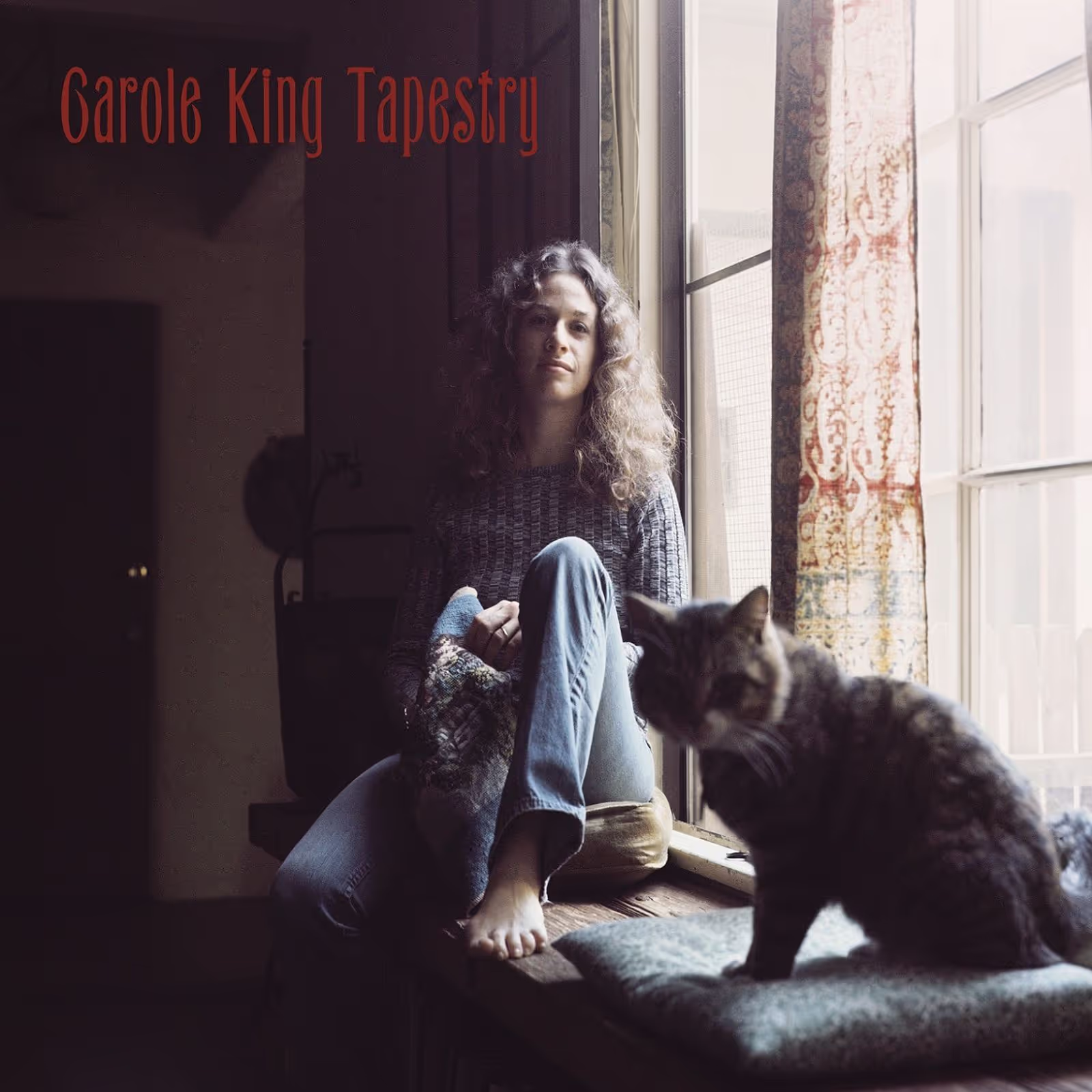
Carole King
Carole King emerged from Brooklyn's Brill Building songwriting factory in the late 1950s, penning hits like "Will You Love Me Tomorrow" and "The Loco-Motion" alongside then-husband Gerry Goffin before Tapestry (1971) made her a confessional singer-songwriter icon. That album, six years on the Billboard 200 and 25 million copies sold, arrived as the counterculture sought introspection over spectacle. King's piano-driven arrangements paired jazz-inflected voicings with folk's directness, her alto conveying vulnerability without artifice. Songs like "It's Too Late" and "You've Got a Friend" mapped emotional landscapes that resonated across demographics, particularly women navigating second-wave feminism's personal-political terrain. She earned four Grammys in 1972, was inducted into the Rock and Roll Hall of Fame twice (as performer and songwriter), and received the Library of Congress Gershwin Prize. Her influence persists in artists from Joni Mitchell to Taylor Swift, proof that craft and candour can define a zeitgeist. King transformed the songwriter into auteur, her catalogue a blueprint for self-authorship in popular music.