Bruce Springsteen
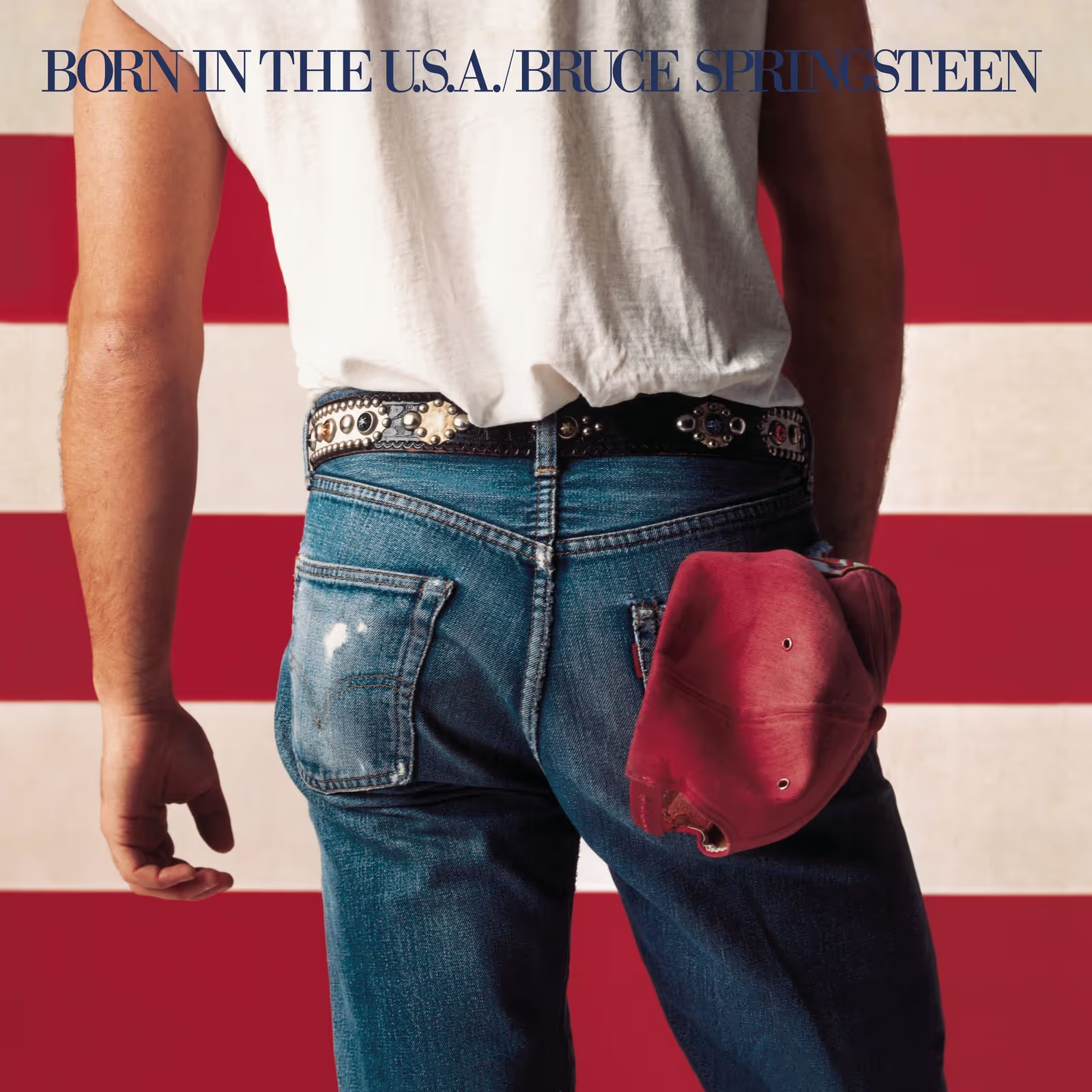
Bruce Springsteen emerged from the New Jersey bar circuit in the early 1970s as rock music's most committed chronicler of working-class American life. His 1975 breakthrough Born to Run established the template: orchestral arrangements colliding with street-level narratives, Phil Spector's wall of sound meeting Woody Guthrie's social conscience. The 1984 juggernaut Born in the U.S.A. sold fifteen million copies domestically, though its sardonic title track was frequently misread as jingoistic celebration rather than Vietnam veteran's lament.
His musical vocabulary draws from early rock and roll, soul, folk protest, and heartland rock, delivered through marathon concerts that regularly exceed three hours. The E Street Band functions as both democratic collective and precise instrumental vehicle, with Clarence Clemons's saxophone providing crucial textural warmth until his 2011 death.
Springsteen's cultural significance lies in his insistence that rock music could address economic anxiety, faded dreams, and class struggle without sacrificing visceral power. Twenty studio albums, an Oscar, multiple Grammys, and Kennedy Center honours confirm his institutional status. He remains America's poet laureate of the highway, the factory, and the fading promise.