Alt-J
Alt-J emerged from Leeds University in 2007, three students united by a shared curiosity about texture and oblique songwriting. The band's name derives from the keyboard shortcut for the delta symbol, a mathematical signifier that became their aesthetic calling card. Their 2012 debut An Awesome Wave won the Mercury Prize and established a template: hushed falsetto vocals from Joe Newman, cryptic literary references, rhythmic shifts that owed as much to hip-hop as indie rock, and production that treated silence as an instrument.
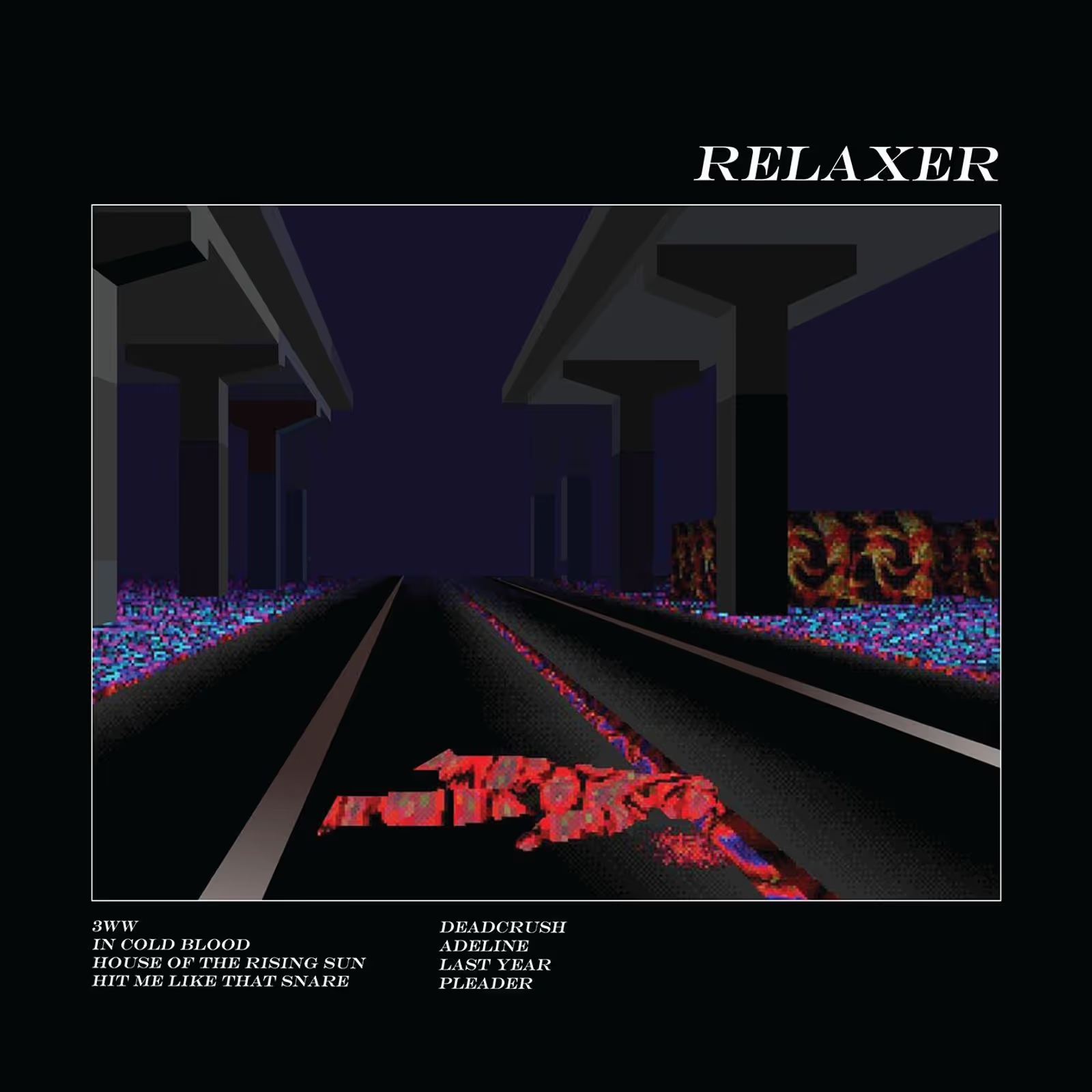
The band's sound resists easy categorisation. Influences span from Radiohead's experimentalism to the sample-based collage work of The Avalanches, yet their output remains distinctly their own. Gus Unger-Hamilton's keyboards provide harmonic beds that feel both ancient and synthetic, while Thom Sonny Green's drums operate in conversation with electronic music's grid-based logic. Relaxer (2017) saw them incorporating string arrangements and further dissolving genre boundaries.
Commercially successful yet critically divisive, Alt-J became shorthand for a certain strain of British indie: cerebral, meticulous, occasionally too pleased with its own cleverness. Their cultural footprint endures through persistent streaming numbers and influence on subsequent acts navigating art-school sensibilities within pop frameworks.